Ghee has a funny way of making simple food taste better.
A little ghee over hot rice, a spoonful in dal, ghee-roasted vegetables, a crispy dosa cooked in ghee—there are plenty of reasons to love it.
But there is one question people often ask:
How much ghee should you actually eat every day?
You may have heard everything from “one teaspoon is enough” to “you can eat several tablespoons of ghee every day.”
The truth is less dramatic.
There isn’t one exact amount of ghee that is right for everyone. The amount that fits into your diet depends on your overall calorie intake, the rest of your dietary fat, your activity level and your individual health needs.
Let’s break it down without the usual internet hype.
How Much Ghee Can You Eat Per Day?
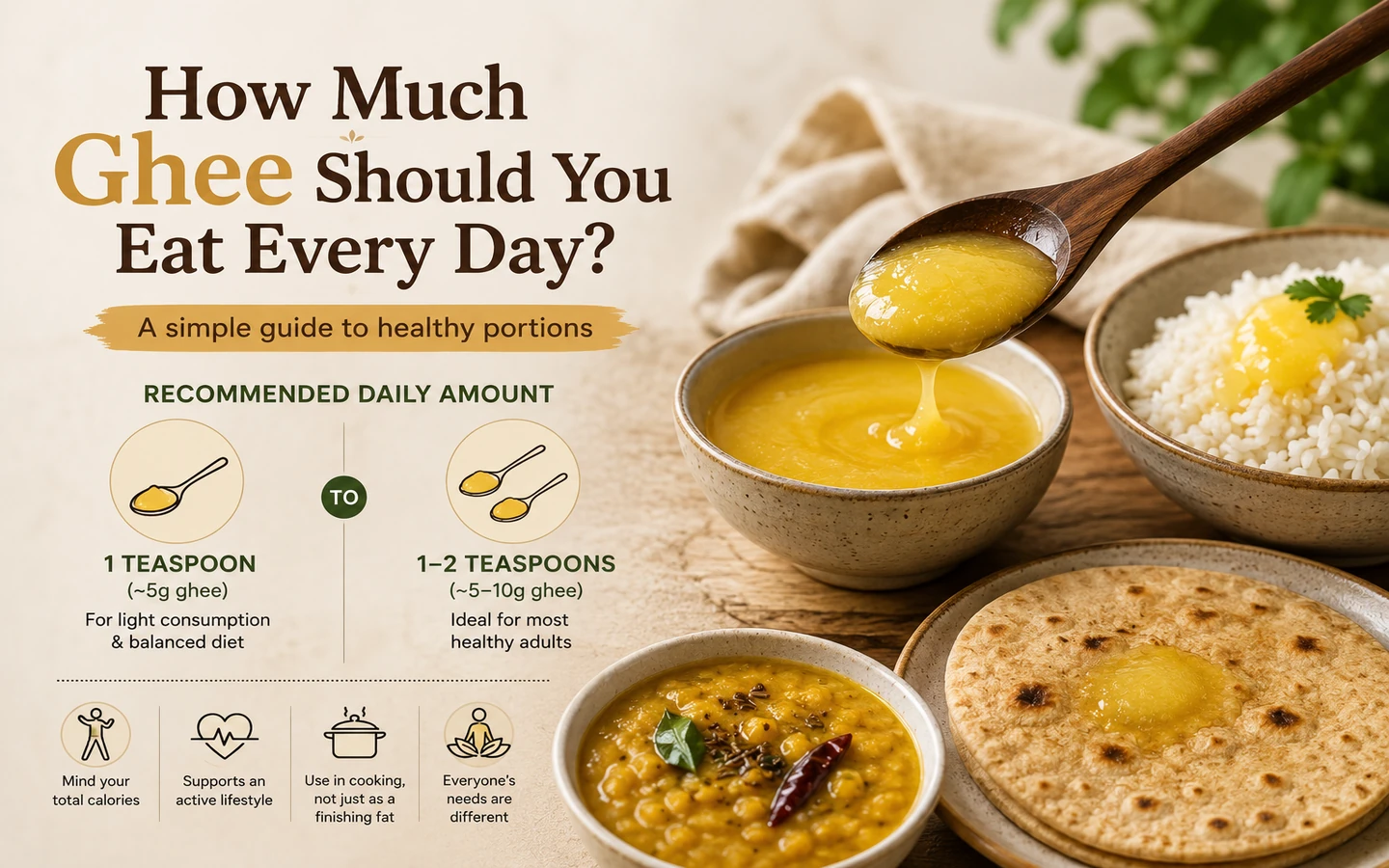
For a generally healthy adult, 1–2 teaspoons of ghee a day can be a practical starting point when it is used as part of a balanced diet.
That’s roughly 5–10 grams of ghee.
You may use it while cooking, add it to rice or dal, or divide it between different meals.
But this isn’t a universal prescription.
If you already eat plenty of other sources of fat—such as butter, cooking oils, nuts, seeds, cheese or fatty foods—you may not need additional ghee.
The important thing is to look at your total dietary fat, rather than treating ghee as something that has to be consumed in a particular quantity every day.
Why Does Portion Size Matter?
Ghee is a fat, and fat is energy-dense.
One gram of fat provides about 9 calories, so even a small amount of ghee contributes calories to your diet.
That doesn’t make ghee unhealthy.
It simply means that portion size matters.
Think about it this way:
A teaspoon of ghee added to a balanced meal is very different from adding several tablespoons to every meal while also consuming plenty of other fats.
More ghee doesn’t automatically mean more health benefits.
Is Eating Ghee Every Day Healthy?
Ghee can absolutely be part of a balanced diet.
It can be used for cooking, tempering, roasting and finishing dishes. It also adds flavour, which can make simple foods more enjoyable.
However, ghee is relatively high in saturated fat. Current dietary guidance generally recommends keeping saturated fat intake within recommended limits and replacing some saturated fats with unsaturated fats when appropriate.
So the better question isn’t:
“Is ghee healthy or unhealthy?”
It’s:
“How does ghee fit into my overall diet?”
That is a much more useful question.
When Is the Best Time to Eat Ghee?
There is no scientifically proven “magic time” when ghee suddenly becomes healthier.
You don’t have to eat it first thing in the morning.
You don’t have to take it before bed.
And you certainly don’t need to drink a spoonful of ghee on an empty stomach because someone on social media told you it “detoxes” your body.
Instead, use ghee when it makes sense for your meal.
Breakfast
Use a small amount for:
- Dosa
- Paratha
- Pongal
- Upma
- Toast
Lunch
Try it with:
- Rice and dal
- Khichdi
- Vegetable pulao
- Sambar rice
Dinner
A small amount can be used for:
- Rotis
- Dal
- Vegetable dishes
- Rice-based meals
You don’t need to add ghee to every meal. Choose the meals where you actually enjoy it.
Can You Eat Ghee If You’re Trying to Lose Weight?
This is where you should ignore a lot of online advice.
Ghee does not magically burn body fat.
It is still a calorie-dense food.
However, that doesn’t mean you have to completely eliminate it if you’re trying to manage your weight.
A small amount can fit into a calorie-controlled, balanced diet.
For example, using a teaspoon of ghee to make your dal or vegetables more enjoyable may be perfectly reasonable.
The problem comes when ghee is treated as a “fat-burning food” and consumed in large quantities because you believe it will somehow cancel out the calories.
It won’t.
For weight management, your overall eating pattern and energy balance matter much more than whether you include a spoonful of ghee.
Is 1 Tablespoon of Ghee Too Much?
Not necessarily—but it is a larger portion.
One tablespoon is approximately 3 teaspoons, so it contains substantially more calories than a teaspoon.
If you are using a tablespoon to cook an entire family meal, that’s very different from eating a tablespoon by yourself.
This is why looking at the serving size and the whole meal is more useful than labelling a particular amount as automatically “good” or “bad.”
What About Ghee for Children?
Children have different nutritional needs from adults, particularly during periods of rapid growth.
A small amount of ghee can be included in age-appropriate meals, but there is no need to force a particular daily quantity.
Instead, focus on a varied diet containing appropriate sources of carbohydrates, protein, healthy fats, fruits, vegetables and other nutrient-rich foods.
For infants and young children, especially when introducing foods or if there are specific nutritional concerns, follow age-appropriate guidance from your pediatrician or dietitian.
What About Ghee During Pregnancy?
Pregnancy doesn’t mean you need to dramatically increase your ghee intake.
Ghee can be part of a balanced pregnancy diet, but it should still be considered as part of your overall fat and calorie intake.
The common advice that pregnant women should eat large amounts of ghee toward the end of pregnancy to make labour easier is not something you should accept as fact.
There is no good reason to load up on ghee simply because someone says it will guarantee an easier delivery.
If you’re pregnant, follow your obstetrician’s dietary advice, particularly if you have been advised to monitor calories, blood sugar or saturated fat.
Is Ghee Better Than Oil?
Again, there isn’t a simple winner.
Different cooking fats have different nutritional profiles and culinary uses.
Ghee is rich in saturated fat and works particularly well for traditional Indian cooking because of its flavour and heat tolerance.
Many plant oils contain more unsaturated fats.
Rather than using only one fat for everything, a varied approach can make sense depending on your cooking style and nutritional needs.
How to Add Ghee to Your Diet Without Overdoing It
Here are some simple ways to enjoy ghee without turning every meal into a ghee-heavy dish:
1. Measure it occasionally.
Instead of pouring straight from the jar, use a teaspoon when you want to keep track of portions.
2. Use it for flavour.
You don’t need a huge quantity. Good ghee can add plenty of aroma with a relatively small amount.
3. Don’t stack fats unnecessarily.
If your meal already contains plenty of oil, butter, cheese or other high-fat ingredients, adding lots of ghee may simply add extra calories.
4. Use it where it actually improves the food.
Dal, rice, dosa, pongal and traditional sweets are obvious examples.
5. Look at your entire diet.
One food doesn’t determine whether your diet is healthy.
So, How Much Ghee Should You Eat Every Day?
For many healthy adults, 1–2 teaspoons a day is a reasonable practical range, provided it fits within their overall dietary needs.
But don’t treat that number as a rule carved in stone.
Someone who eats very little added fat may have different needs from someone whose diet already contains plenty of butter, oil, nuts and other fat sources.
And if you have a condition that requires you to manage saturated fat or calories, your ideal intake may be different.
The goal isn’t to eat as much ghee as possible.
It’s to enjoy good-quality ghee in sensible portions.
Choose Ghee for the Food, Not the Hype
Ghee doesn’t need miracle claims to earn a place in your kitchen.
It has a rich aroma, a distinctive flavour and a long history in Indian cooking.
Whether you’re adding a little to hot rice, making a fragrant dal tadka or preparing a traditional sweet, the key is simple:
Use good ghee. Use the amount that suits your diet. And enjoy it.
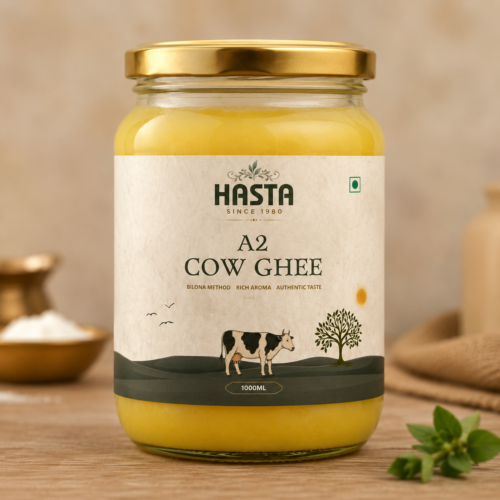
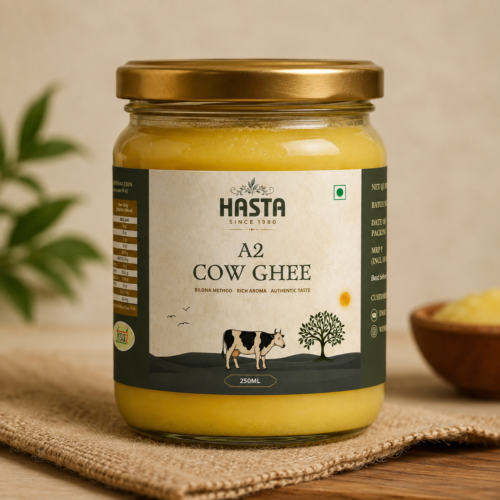
Looking for premium cow ghee for everyday cooking?
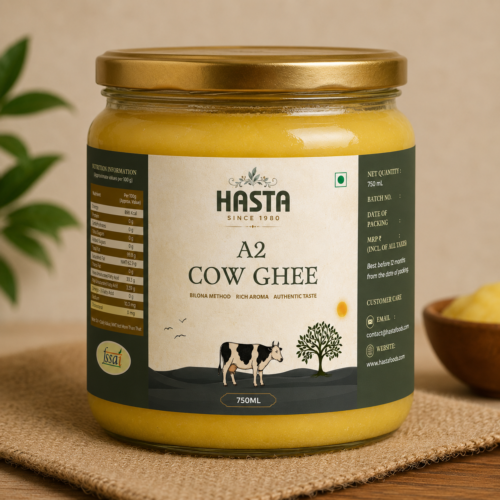
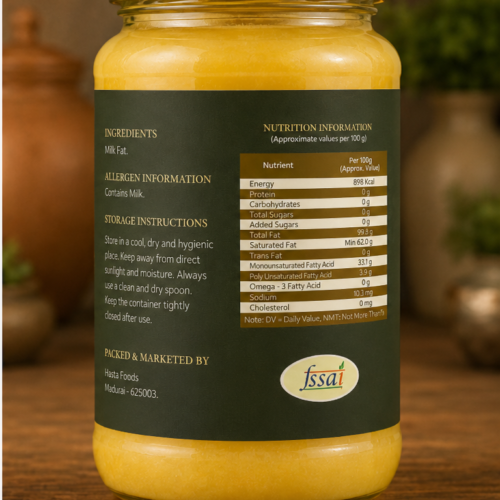
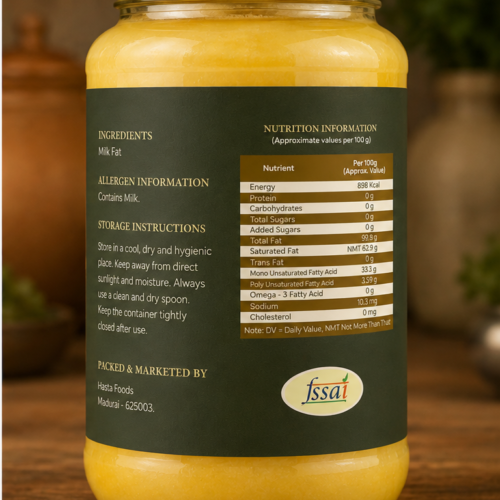
Explore Hasta Foods Ghee → [Shop Now]